
A fence holds a dog only if it stands taller than he can jump, closes tighter than he can squeeze, and sits deeper than he can dig. Most escapes trace back to one of those three. Which one is your problem depends on your dog.
Height, by what your dog does
Pick height from the animal in front of you, not the breed average. A determined climber clears a fence that a heavier, lazier dog the same size never bothers to test.
- Small breeds that do not jump stay behind four feet.
- Medium and large dogs want five to six.
- Athletic jumpers and known climbers need six feet, sometimes with an inward facing top extension so there is nothing to hook a paw over.
A dog that can see a target through the fence tests it far more often than one that cannot. For a reactive dog, a solid privacy run beats another foot of height.
Digging, and what stops it
Digging is the most common escape route and the easiest to design out on install day:
- Bury the mesh or pickets several inches below grade, so your dog hits fence instead of soil.
- Turn an L shaped wire apron outward under the surface. He digs at the fence line, meets wire, and gives up.
- Run a concrete or gravel mow strip under the fence, which also keeps a strimmer off the boards.
Retrofitting any of these later costs more than building them in, so tell us at the estimate if your dog already digs.
Gaps and spacing
Puppies and small breeds fit through openings that look far too narrow. Check picket spacing, the gap under a gate, and the space where the fence meets a house corner against the smallest dog who will use the yard.
Which fence suits a dog run
| Fence | Why it suits a dog | Watch for |
|---|---|---|
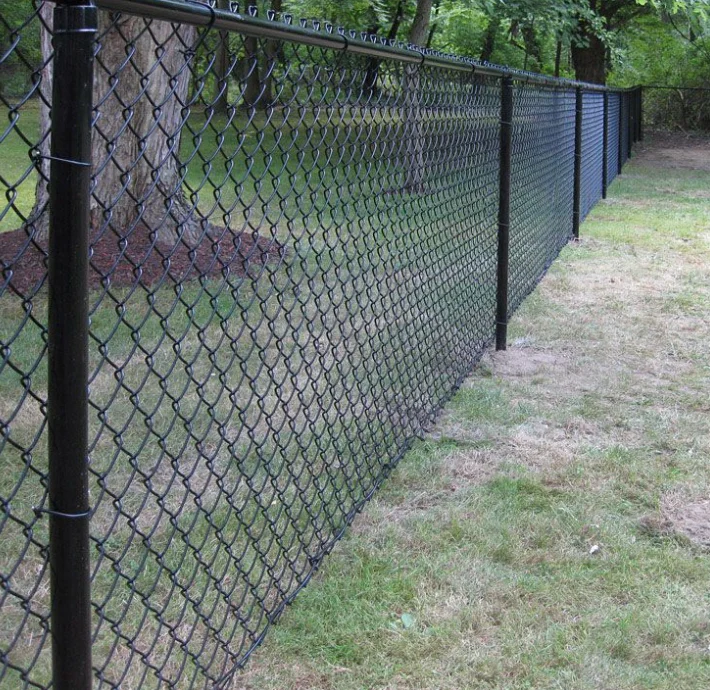
| Chain link | Lowest cost, nothing to chew, easy to bury or apron at the base | He can see through it, which can feed barking |
| Wood privacy | Kills the sightline, which calms a reactive dog | Boards take chewing and clawing at the base |
| Aluminum | No rot, nothing to chew, narrow picket spacing | Spacing has to suit your smallest dog, and it is see through |
| Vinyl privacy | Solid, smooth face with no foothold and nothing to chew | Higher up front cost |
Why invisible fencing fails some dogs
A buried wire system teaches a dog to stop at a boundary using a collar correction. It works for some animals and fails badly for others, and the failure modes are worth knowing before you pick one over a real fence.
- A dog in high drive takes the correction and keeps going. Once he is out, that same boundary discourages him from coming home.
- It keeps nothing out. Other dogs, wildlife and people walk straight in.
- It depends on a working collar battery and an unbroken wire loop.
- It does nothing for a dog who reacts to what he can see past the line.