HOA Fence Approval in Athens Subdivisions
What most Athens-area HOAs actually check before approving a fence.
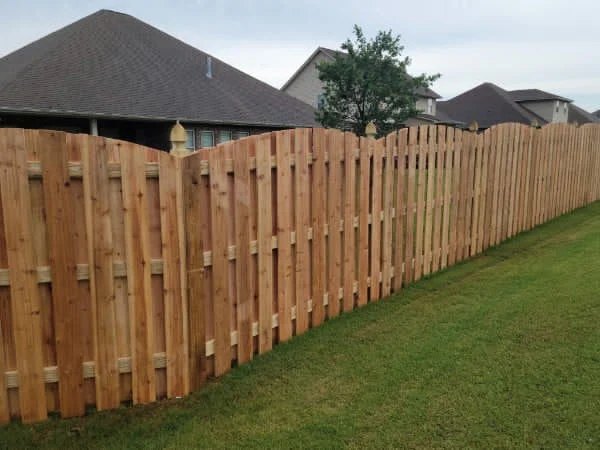
Most Athens-area HOAs require approval before a fence goes up, checking height, approved materials, and which side (the finished side, without visible rails) faces the street or the neighboring yard.
Most HOA-governed subdivisions around Athens and Madison want written approval before a fence goes up. A board, or an architectural review committee acting for it, checks height, material, colour and which way the finished side faces. That approval is separate from any city or county permit, and clearing one does nothing for the other.
What covenants normally control
| What covenants control | What it means for your build |
|---|---|
| Maximum height | Commonly six feet at the rear, lower or not allowed at all in a front yard |
| Permitted materials | Wood, vinyl and aluminum are the usual approvals. Chain link is often excluded from front and side yards |
| Colour | Some covenants name one approved vinyl colour, which removes the choice entirely |
| Finished side | The face with no rails or posts showing has to point outward, toward the street or your neighbour |
| Where the fence may start | Often measured from the front corner of the house, not the property line |
| Prior approval | Whether an application has to clear the board before any work begins |
Read your own covenants. What a neighbour built proves nothing. Fences that predate the current rules, or that were approved as an exception, are not precedent.
The finished side rule
A standard privacy fence has a clean face and a structural face. Pickets go on one side, rails and posts show on the other. Almost every covenant that mentions it wants the clean face pointing away from your property, so the street and your neighbour see boards, not framing.
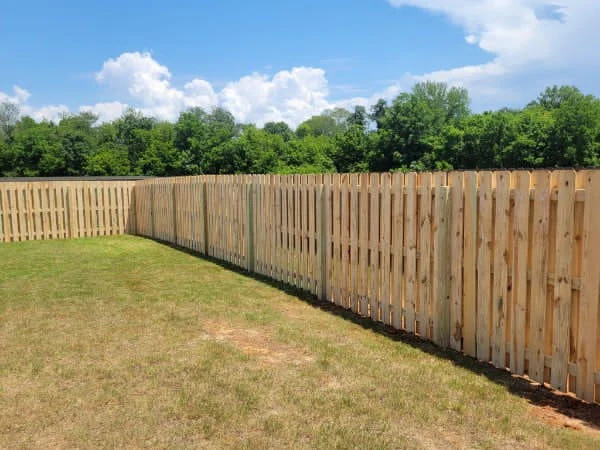
That leaves you looking at the rails from your own yard. Shadowbox construction ends the argument, because boards alternate from one side of the rail to the other and both faces look the same. It is the reason shadowbox comes up so often in covenanted subdivisions.
What goes in the application
- A site plan or plat copy marking where the fence will run.
- Height, material, style and colour.
- Gate positions.
- Which way the finished side faces.
- Sometimes a product photo or a manufacturer specification sheet.
- Occasionally written acknowledgement from the neighbours on either side.
Our written estimate carries the height, material, style and gate positions, which is most of that packet. The plat and the neighbour signatures are yours to supply.
How long approval takes
The waiting is the part people underestimate. Some boards review applications on a set schedule instead of as they arrive, so a submission can sit until the next meeting. Others turn them round in days.
Ask your board two questions early: what the application has to contain, and when they next review. Those two answers let us schedule your fence against a real date instead of a guess.
If the board says no
A refusal is usually about one clause, not the whole plan. Ask which clause, in writing. Height, material and colour are normally adjustable, and a revised specification often clears on resubmission. Placement is the harder one, because it usually ties back to a plat line or an easement, not to taste.
Where a covenant rules out what you actually need, say so at the estimate. A six foot shadowbox and a six foot board on board screen a yard almost identically, and only one of them may be permitted.
Approval is not a permit
Board approval satisfies no permitting requirement, and a permit satisfies no covenant. Depending on height and position you may need both. The Athens permit rules post covers the city side.
Easements on newer lots
On a recent build, check the plat before fencing to the edge of what looks like your yard. Builder grading, drainage easements and utility easements do not always stop where the mown grass stops, and a fence sitting across an easement can be ordered out at your own cost. A board approval does not protect you from that, because the board is not the utility.
Before you submit
- Pull your covenants and read the fence clauses word for word.
- Confirm whether approval must land before work starts, or whether notification is enough.
- Find out the review schedule.
- Check the plat for easements.
- Check separately whether the city or county needs a permit.
We build to whatever the covenant and the permit allow, and we would rather sort both out at the estimate than discover a conflict once material is on site.
Free on-site estimate
We measure at your property and put the price in writing. No obligation.
Frequently Asked Questions
What does an HOA typically check on a fence application?
Height, approved materials, and which side of the fence faces outward. Getting the guideline document before finalizing the design is the fastest path through approval.
What is the finished-side rule?
Most HOAs require the side of the fence without visible rails or posts to face the street or the neighboring property. We build this in by default.
Can an HOA stop me putting up a fence at all?
A covenant can restrict height, material, colour, style and placement, and some prohibit fences in front yards outright. Read your own covenants, since what a neighbour built may predate the current rules.
What if my HOA approves a fence the city will not permit?
You need both. Approval from a board carries no weight with the permitting office, so check the city or county requirement separately before ordering material.
Related: Fence Permit Rules | Privacy Fencing
Get Your HOA Guidelines Checked
Call (256) 510-8095 with your subdivision name before finalizing a design.