
Wood vs. Vinyl Fence for an Athens Backyard
Wood costs less upfront and needs staining; vinyl costs more upfront and needs almost none.
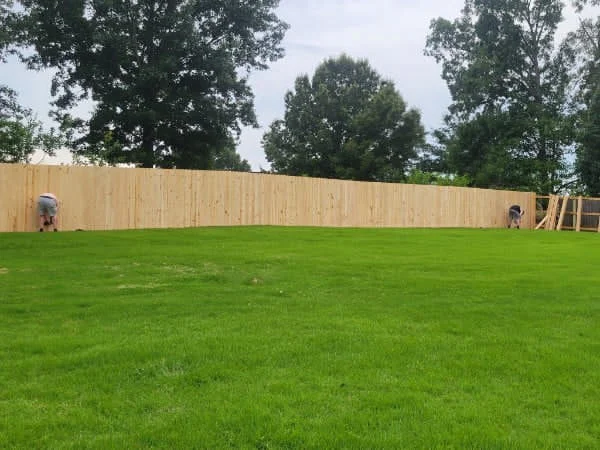
Wood costs less upfront and needs staining every two to three years. Vinyl costs more upfront and needs almost no maintenance. Both meet the same HOA and height rules in Athens.
Wood costs less to put up and asks for work every few years. Vinyl costs more to put up and then stops asking for anything. Almost every other difference between them follows from those two sentences.
The cost question, asked properly
Comparing them on the quote alone favours wood, and comparing them on the quote alone is also the wrong comparison. The honest version counts what you spend across the years you will own the fence: the install, plus staining every few years, plus the boards that get replaced.
Pressure treated pine starts lowest. Cedar sits higher and vinyl higher again. Over a long enough hold the running costs close most of that gap, and where the line crosses depends on how diligent you actually are about staining. If the honest answer is that the fence will never get stained, wood stops being the cheap option and starts being the one that greys and cups.
We price both at the estimate so you are comparing real numbers for your footage instead of averages.
Repairs pull the other way
Wood repairs cheaply and locally. One split picket costs a board and twenty minutes. Vinyl repairs by panel or rail, which is a bigger unit, and matching the colour on a fence that has stood in the sun for years can come out slightly off. That is worth knowing before you choose an unusual colour you may need to match later.
How each one behaves in weather
Wood moves. It takes on moisture and gives it back, and that cycle is what cups boards and opens gaps in a run that was solid when it went up. Board on board and board and batten overlap enough to absorb the movement; a plain butted picket fence does not.
Vinyl does not rot and insects leave it alone, so it fails differently. Its weak points are impact in cold weather, when the material is at its most brittle, and UV damage on panels made without enough inhibitor in the mix. Neither is something you can maintain your way out of, which is why panel grade matters more on vinyl than on any other fence.
Wind
A solid face catches wind, and it makes no difference whether that face is wood or vinyl. On an exposed run the fence behaves like a sail and the load goes into the posts and footings.
Shadowbox is the wood answer, because air passes between alternating boards instead of pushing on them. Vinyl privacy panels are solid by design, so on a long exposed line they want reinforced bottom rails and heavier footings, not a different panel.
Covenants often decide it for you
In a covenanted subdivision the choice narrows before you get to preference. Some covenants name one approved vinyl colour, which effectively picks the material. Others require the finished side to face outward, which pushes wood toward shadowbox. Read the covenants first. Our HOA approval post covers what boards ask for.
They install differently
Both get posts below the frost line in concrete. The difference is that a vinyl post is hollow, so concrete packs around it and the panel tabs lock into routed holes instead of getting face nailed. Post spacing has to land exact, because you cannot trim a vinyl panel to close a gap the way you can shift a wood picket.
That makes vinyl less forgiving on uneven ground, and it is part of why a sloped yard is worth walking before the material is chosen at all.
Which one to pick
| If this matters most | Pick | Why |
|---|---|---|
| Lowest price on day one | Wood | Pressure treated pine is the cheapest privacy fence we install |
| Lowest spend over fifteen years | Vinyl | No staining cycle and no board replacement |
| Never wanting to maintain it | Vinyl | Washing it down is the whole job |
| Cheap repair of one damaged board | Wood | A single picket swaps out for the price of a board |
| A covenant that names a colour | Vinyl | Colour is moulded in, so it matches the specification exactly |
| An exposed, windy run | Wood shadowbox | Air passes through it instead of pushing against a solid face |
| Both sides looking the same | Either | Shadowbox in wood, or any vinyl privacy panel |
| Knocks from mowers, kids and equipment | Wood | It splits and gets a new board, where vinyl cracks in cold |
Neither material is the right answer on its own. Longer detail sits on the wood fencing and vinyl fencing pages, and we will give you a straight recommendation for your yard at the estimate, not a push toward whichever costs more.
Free on-site estimate
We measure at your property and put the price in writing. No obligation.
Frequently Asked Questions
Which costs more, wood or vinyl?
Wood costs less upfront; vinyl costs more upfront but needs far less maintenance over time, which can close the gap over the life of the fence.
Which is easier to repair, wood or vinyl?
Wood is generally easier to repair section by section. Vinyl repairs are possible but color-matching older panels to new material can be harder.
Does vinyl need any maintenance at all?
Essentially just an occasional wash. It does not need staining or sealing the way wood does.
Which lasts longer, wood or vinyl?
Vinyl does not rot and insects ignore it, so it usually outlasts wood on the same site. Wood life is decided by its posts at the soil line, and steel posts narrow the gap considerably.
Is vinyl worth the extra cost in Alabama?
It suits you if you would rather wash a fence than stain one, and humidity does not touch it. Wood costs less up front and repairs board by board, so the answer depends on how long you plan to own the fence.
Related: Wood Fencing | Vinyl Fencing | Privacy Fencing
Still Deciding?
Call (256) 510-8095, a free estimate can price both options side by side.